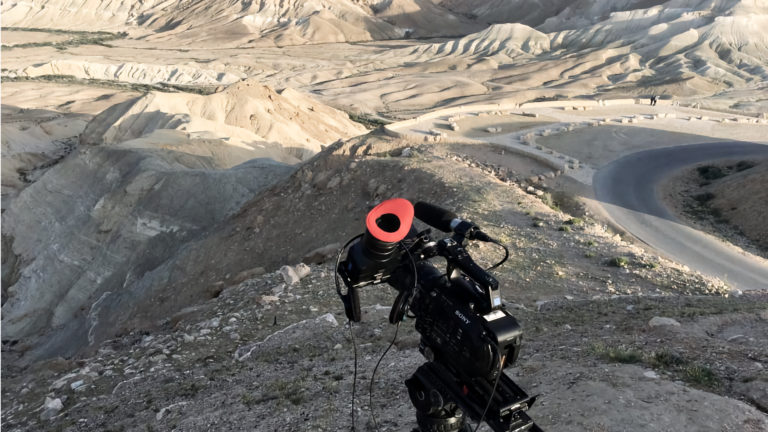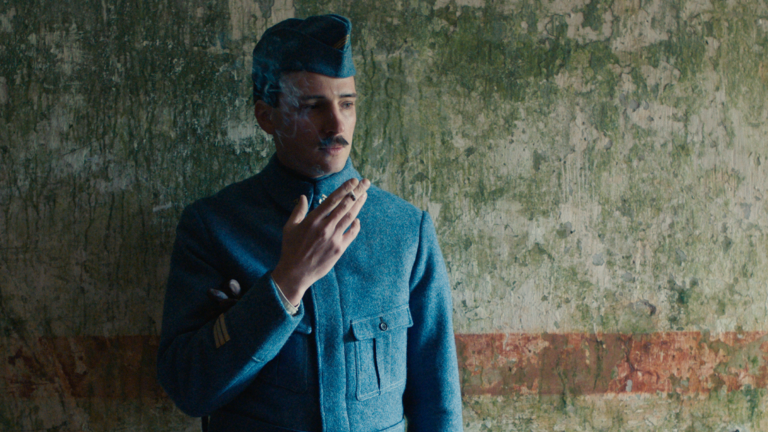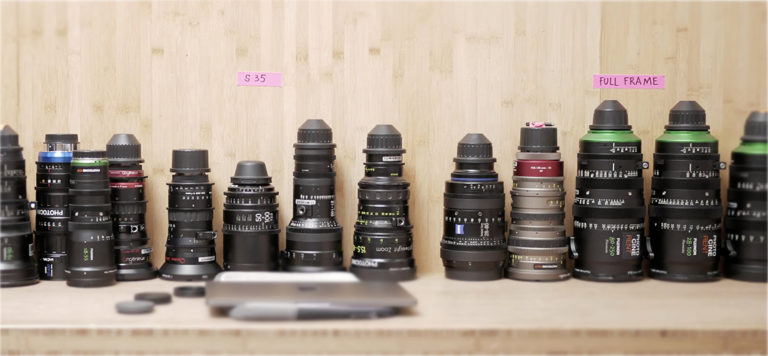
Which zoom to choose for this documentary, this clip, this fiction, when looking for compact and not too heavy multifocal lenses? Or because you are going to shoot far away, because funding constraints require traveling with a lightweight crew or reduced equipment?
Many of us regularly ask and re-ask ourselves these questions… What will we prioritize then? The aperture? The focal range? Depending on the project, does stabilization become essential? Why choose photo lenses versus “cinema” lenses?
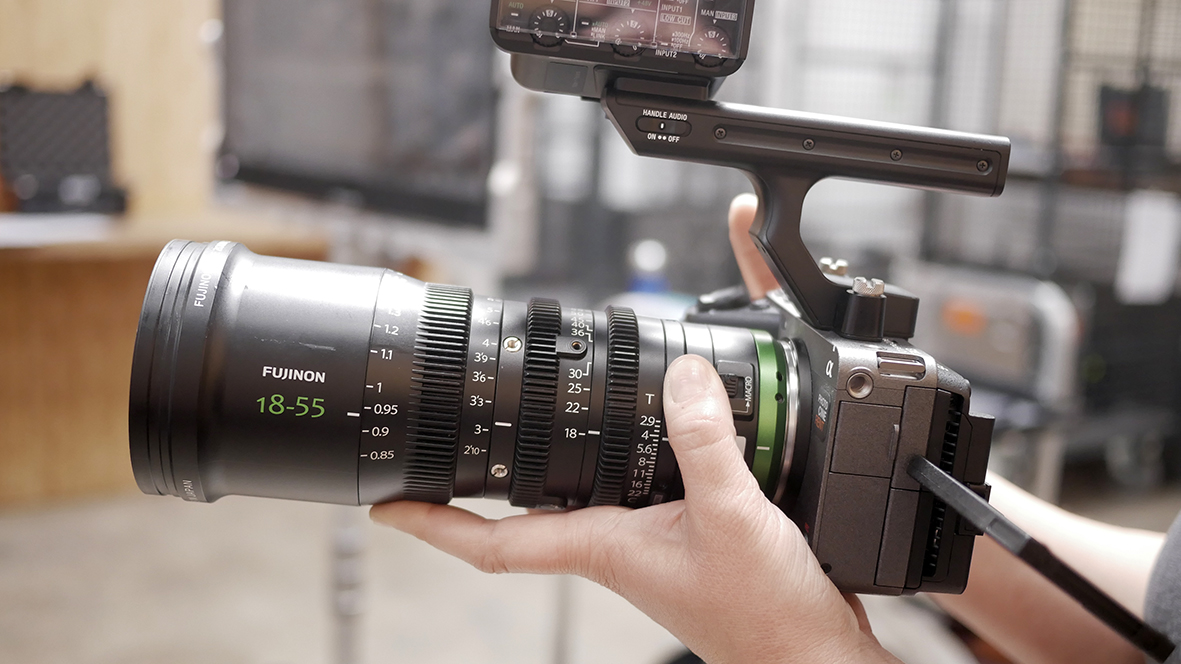
Which zoom for which project?
Since the great convergence that saw traditional cinema, video, and photography equipment combine to plunge cinematographers into digital cinema, each new camera, each new sensor, each new lens raises questions about rigging, practicality, and ultimately our way of producing images in production contexts that are themselves transforming with the evolution of distribution methods.
Despite the fact that our images are increasingly viewed on computer and smartphone screens, their technical quality and the care we bring to their production become ever more demanding, as the general public, cinephile or not, gets used to seeing on small screens superproductions previously intended for the big screen. In short, even though it seems paradoxical to shoot in 4K and above for our films to be viewed on screens of just a few inches, the technical demands keep growing. This creates the obligation to work within these demands, to find the right compromise between portability, price, and lens performance. A matrix (published as a PDF document) matching market zooms according to their focal range, maximum aperture, and weight, in a constantly evolving market, is accessible via THIS LINK.
It is in this context of demanding standards and pragmatism that the “Optics” working group of the Union des Chefs Opérateurs reviewed 64 “lightweight or compact” zooms on the market, in a working document available as PDF on our website (please note, access is restricted to UCO members).
Distributed across several sensor families (Full Frame, Super 35mm, MFT, and APS-C) and for different mounts (PL, L, Canon EF and Canon RF, Sony E, Nikon), these zooms present a variety of features, build qualities, and performances unique to each.
Information gathered in the PDF about zooms
The table gathers the following information: Brand, Model, Coverage (sensor), Mount(s), Focal length, Minimum aperture, Focus, Mechanical focus ring throw, Front element, Diameter, Length, Weight, Notes, New price.
The market zooms studied cover S35 / APS-C with 22 zooms, and Full Frame with 32 zooms (the most choices), plus 4 S16 zooms and MFT zooms. Most of these zooms are in PL or PL/i mount, and many are also available in Canon EF and Sony E mount. Some are available in L mount. It should be noted that the Canon RF mount is less commonly found in cinema lenses as it has not been opened by Canon to other manufacturers to date.
Being a cinematographer today means being able to work with an incredible variety of cameras, formats, lenses, and induced aesthetics, playing with authentic vintage or “contemporary” vintage for example! And of course “cinema-modifying” or rehousing a photo lens as needed.
This is very true for primes, but for zooms it can be more delicate as zoom construction is more complex. It is notably known that photo zooms are unlikely to remain parfocal over time, and recalibration (only through after-sales service) is often far too expensive to be worthwhile. It is also known that in shooting situations, a constant aperture is preferred, which also eliminates some photo zooms. With these preambles laid out, how to make a choice when heading to a shoot with lightweight and compact zooms?
A reference document
To go beyond manufacturers’ brochures and videos, we wanted to see what choosing one or more lightweight zooms concretely entailed, in an empirical and impressionistic way, without judgment on image rendering. After all, we are not engineers, but cinematographers, dealing with the reality of equipment as much as with our physical condition and the way we move around…
In June 2021, we were able to test around thirty lightweight zooms with rental houses Panavision, TSF, and PhotoCineRent (article here). Since then, we tested new zooms with PhotoCineRent, and we present them in the second part of this review.
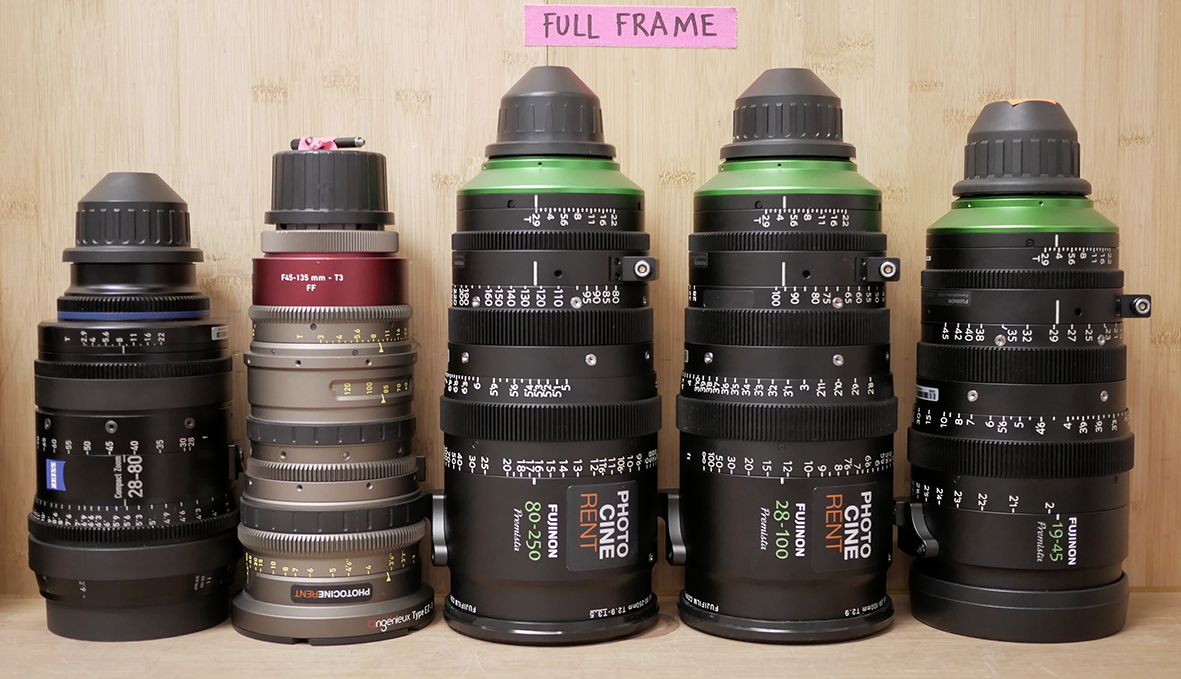
To these zooms, one must add the very numerous photo zooms commonly used in production, in documentary as in fiction. They exist from all brands, across an infinity of focal ranges (between 18 and 800mm)… Performance varies greatly of course.
Rehoused and “branded” zooms
Some photo zooms have been rehoused and “branded” (marketed under another brand name) for cinematographic use, often for specific focal ranges. This has been the case with Canon lenses “Century-ized” or “Panavised” (150-600mm), Pentax (250-600mm) or Nikkor 50-300mm “Van Diemen-ized” or Tokina lenses “Duclos-ized” (11-16mm).
MFT zooms
MFT or Micro 4/3 is notably the sensor format of the Black Magic Pocket 4K, or the GH4 and GH5 from Panasonic. With a crop factor easy to calculate compared to FF (x2), one of the advantages of MFT is being able to naturally double the shot value offered by an FF focal length. There are very few truly practical MFT zooms, apart from the 2 DZO zooms.
Lightweight and compact zooms in the field, in fiction and documentary
To complement this review of lightweight and compact zooms, we thought it interesting to share our experiences with several guests invited during a discussion evening organized by the Doc and Fiction group of the association, in late April 2021. In addition to Union members, present were Jean-Yves Le Poulain, representative of Angénieux, Raphaël Palin Saint Agath, camera assistant, and Antoine Parouty, cinematographer.
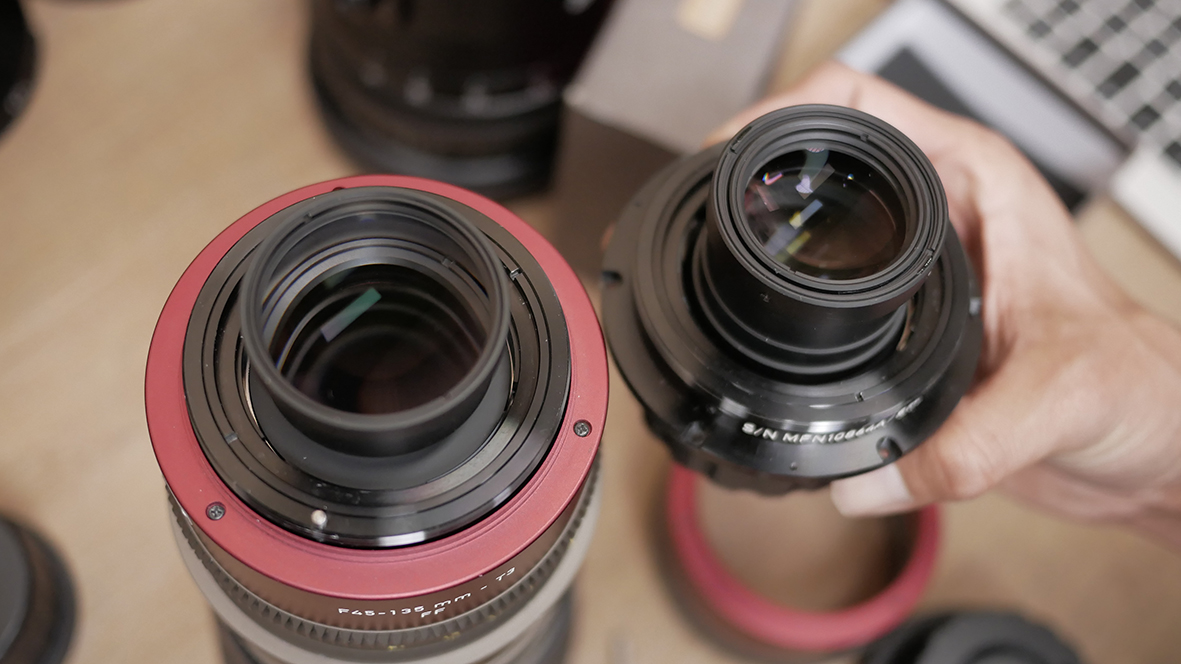
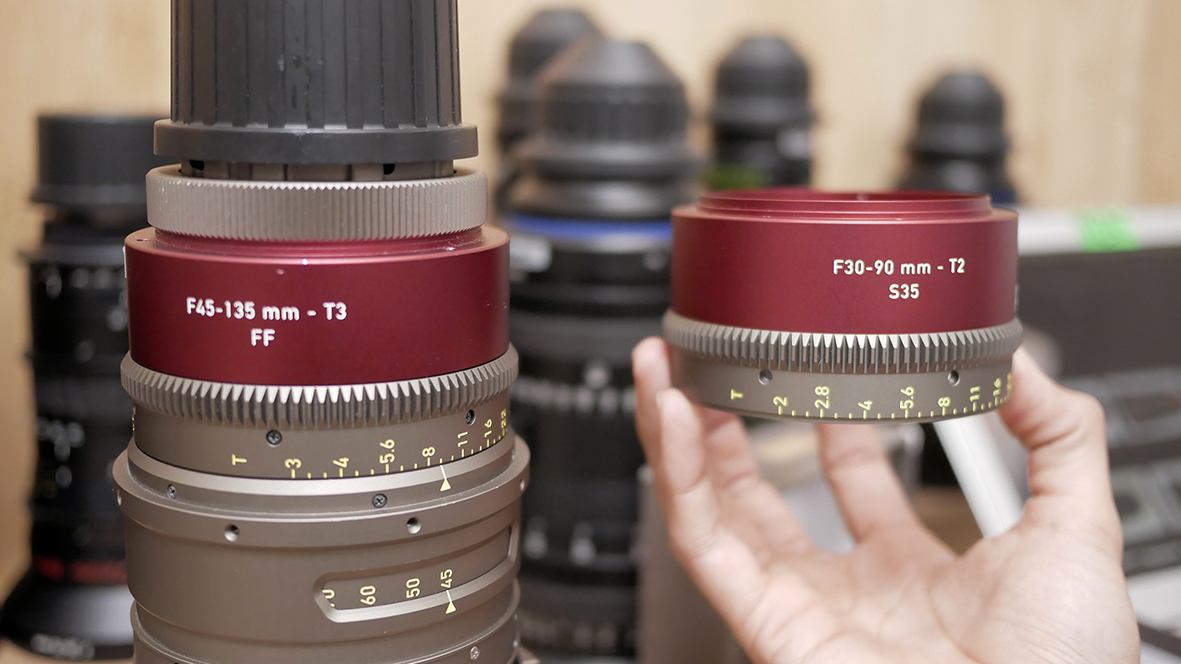
Jean-Yves Le Poulain notably explained the principle of the EZ range, currently two FF zooms 22-60mm and 45-135mm, convertible thanks to additional lens elements in S35, and whose compactness and versatility make them very interesting tools for lightweight shooting.
Regarding Angénieux zooms, Raphaël Palin Saint Agath discussed the shooting of the last 2 episodes of the series Le Bureau des Légendes (co-photographed with Paul Guilhaume), of Sébastien Lifshitz, shot with zooms in order to cut the camera as little as possible for technical reasons during the shoot. The dramaturgical writing of the film led its director to frame tighter and tighter to the point of nearly doubling the focal length!
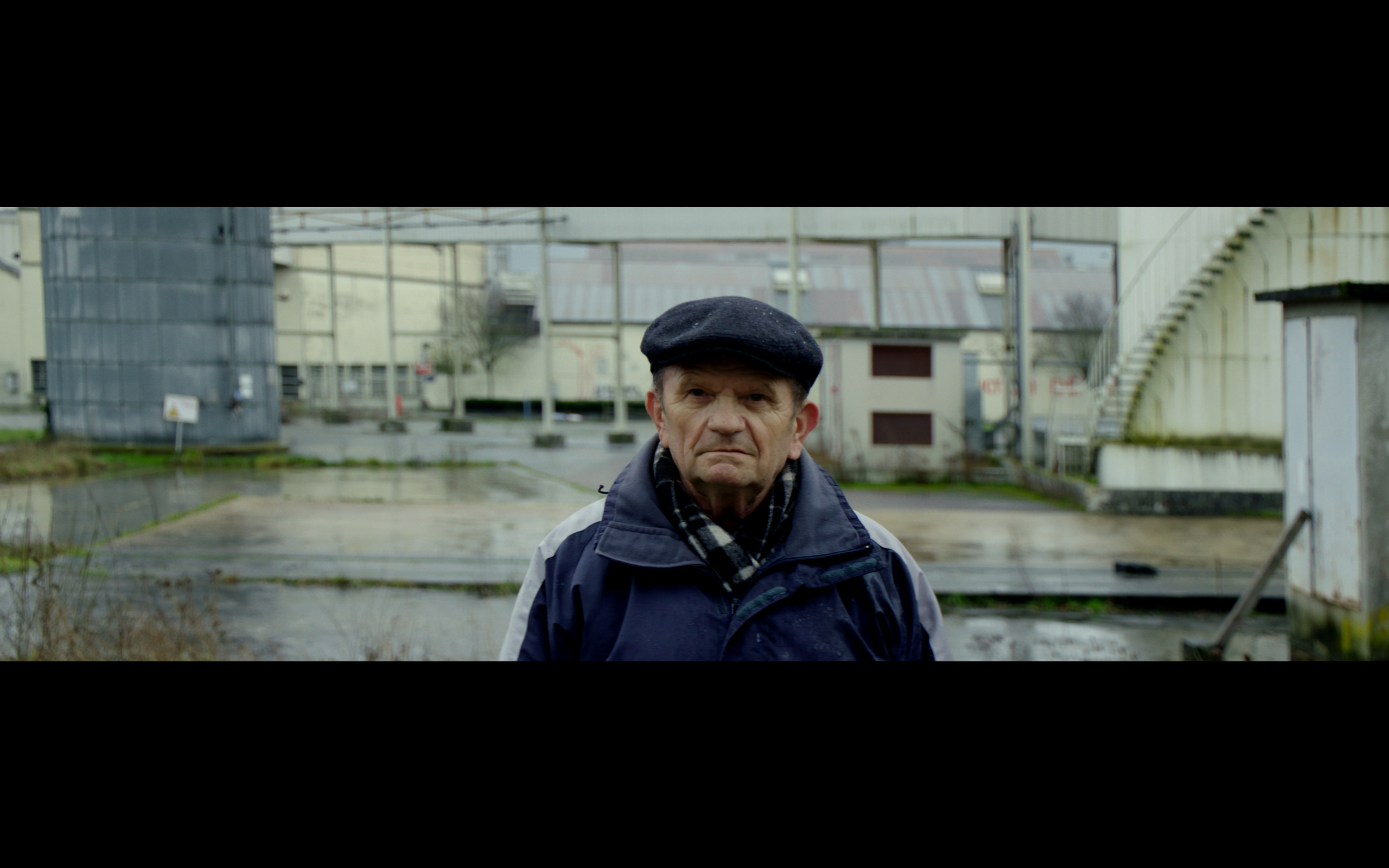
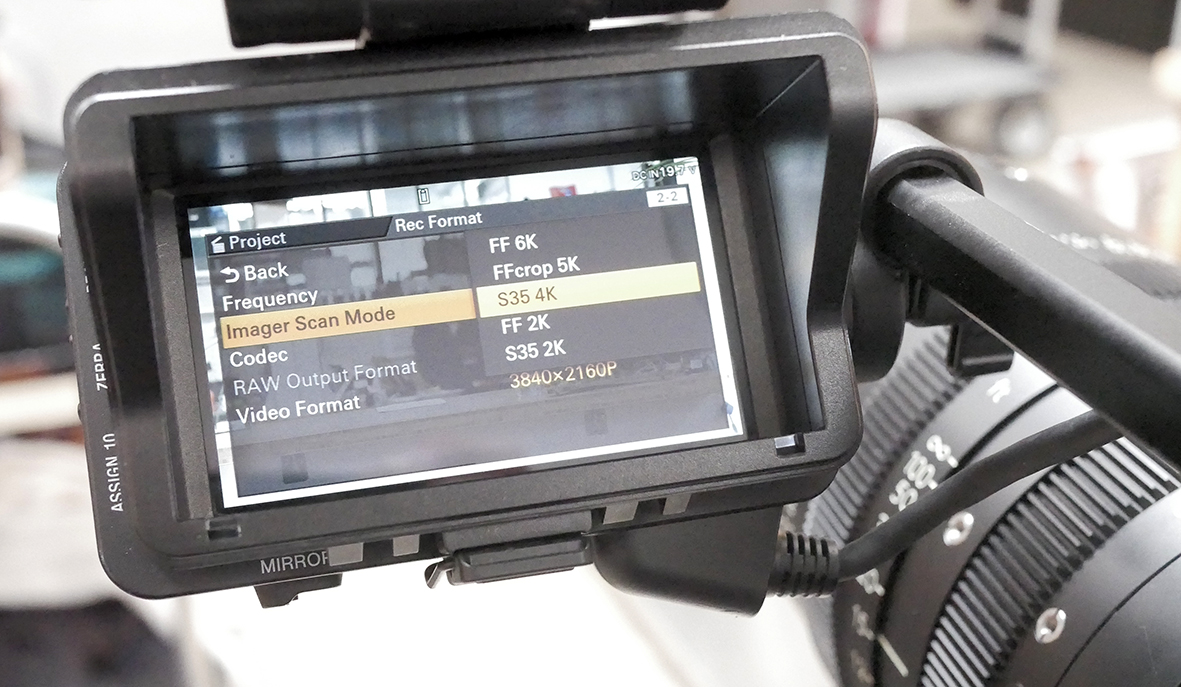
We also all discussed the particularities of Full Frame shooting with cinema lenses vs photo lenses, and the numerous compromises that must be considered. Among them, “focus by wire” lenses, whose focus ring turns infinitely. In this case, it is difficult to perform smooth and reactive focus pulls, as this technology was basically designed for focus to be managed by a still camera. However, under certain shooting conditions and with cameras and lenses that allow it, focusing on the LCD can be very effective.
Furthermore, the use of gimbal-type stabilizers in documentary conditions almost necessarily requires the use of autofocus. While we may have been reluctant toward this approach at some point, we must face the fact that using new tools pushes us toward new practices.
Still in documentary, we wonder about doing without zooms, shooting only with prime lenses. Some Union members have had this experience, and even advocate for this approach, but in practice it proves rather exceptional. Directors filming in documentary conditions very often call upon the zoom for its versatility.
Zooms, our zooms…
Emmanuel Soyer talked about his experience on Adolescentes by Sébastien Lifshitz, a film where the choice of lightweight zooms proved essential to follow the characters intimately over several years. Pierre-Hubert Martin discussed Petite Maman by Céline Sciamma, where the choice of compact equipment allowed maintaining the intimacy required by the story.
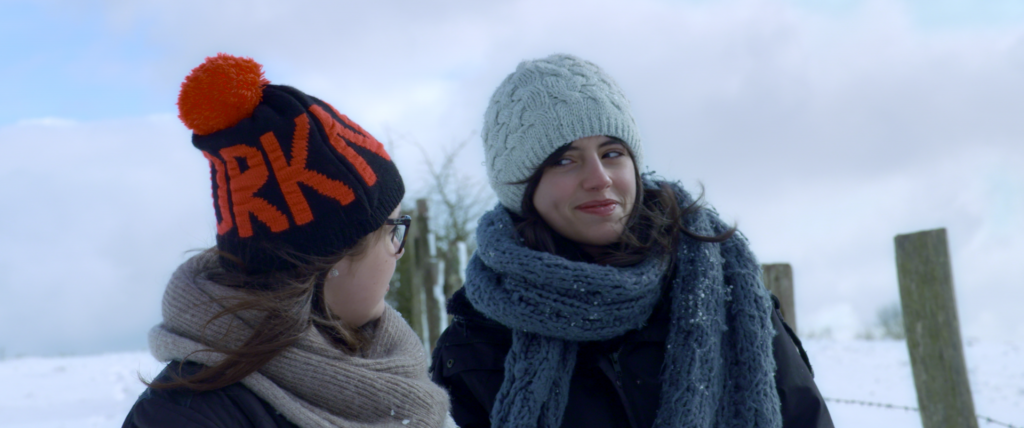
On this question of cropping, in practice, in editing, directors have an ease with reframing that can be disturbing, hence the need to find the right focal length even in documentary conditions. The dramaturgical writing of the film led its director to frame tighter and tighter to the point of nearly doubling the focal length!