It’s everywhere, making it difficult to keep up with the latest developments. Generative AI continues to achieve remarkable feats in terms of realism and production capacity, whether it’s images, videos, music, or text. A turning point is being reached: we can no longer distinguish between human-generated and AI-generated creations; they’ve become indistinguishable. Yet, it seems essential to me to bring a political perspective back into the technical discussions surrounding AI, which often omit a part of the issue, as if technology were a discipline separate from the rest of the world. In the conferences I attend and some discussions about creative professions, I’m disappointed by the lack of contextualization. While it’s difficult to stay informed and up-to-date, we mustn’t let our technical tools become disconnected from ethical or political issues. The AFC’s editorial last November had begun to reflect on the subject, and I hope that future reflections will be able to deepen it.
As directors of photography, we share a technical curiosity that is often very useful in the profession. However, I believe that we often collectively and sorely lack curiosity about the world around us, given the ecological morbidity that generative AI represents.
Alongside our technical curiosity, we can combine a curiosity for the rest of the world. A curiosity for our screenwriting colleagues who are far more immersed in the challenges of generative AI. Our colleagues in animation, music and sound design, VFX, and actors… A curiosity for our world and for the living conditions we desire in our professional and personal lives. For greater collective well-being.
So I propose a revitalizing cocktail, fueled by curiosity, come on!

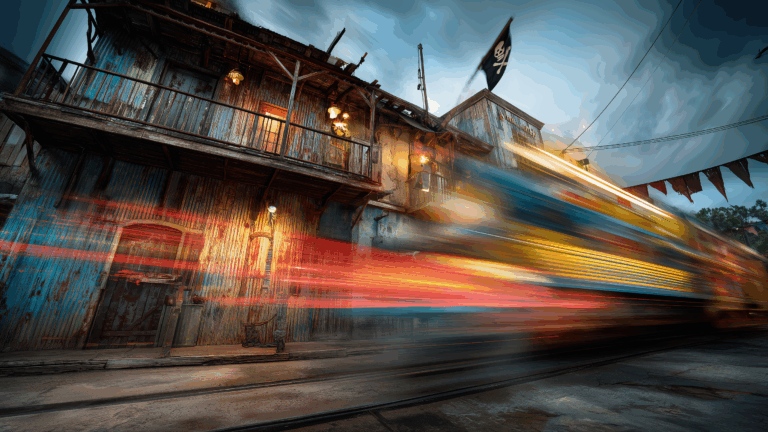
Titanic, James Cameron
Many of us actively keep up with technology, driven by our personal curiosity. This takes time, and we all know someone who’s THE resident techie (or maybe it’s you!). Furthermore, software integrates AI tools very quickly with each new version, and it’s up to us to take the initiative to look into it and understand how these tools meet our needs (or not, for that matter). IN SHORT: things are moving very fast!
Before we embark on this intellectual journey together, here are a few points about the practical realities of generative AI:
- Generative AI is not a neutral tool : it is developed by digital industries, private companies with economic agendas and a market to defend. These tools, inextricably linked to the tech giants—the only entities capable of funding them—cannot be depoliticized. They have now become political levers at the national level in the race for innovation. Their development corresponds to specific choices and deployment strategies (for example, the graphic design dedicated to AI tools is often associated with magic ).
- Generative AI is not a harmless digital tool from an energy perspective, as it exploits resources (water and electricity) even more voraciously than other digital technologies. Its deployment is particularly significant for certain regions (in the USA, Mexico, and Chile, for example) that suffer directly from water scarcity. It is also a major drain on the minerals used to manufacture chips, processors, and graphics cards (copper, cobalt, lithium, etc.). Digital technology as a whole is far from immaterial, even if our use of it distances us from physical realities. For example, Google uses drinking water for more than two-thirds of its consumption. This raises serious questions about our modern relationship with resources.
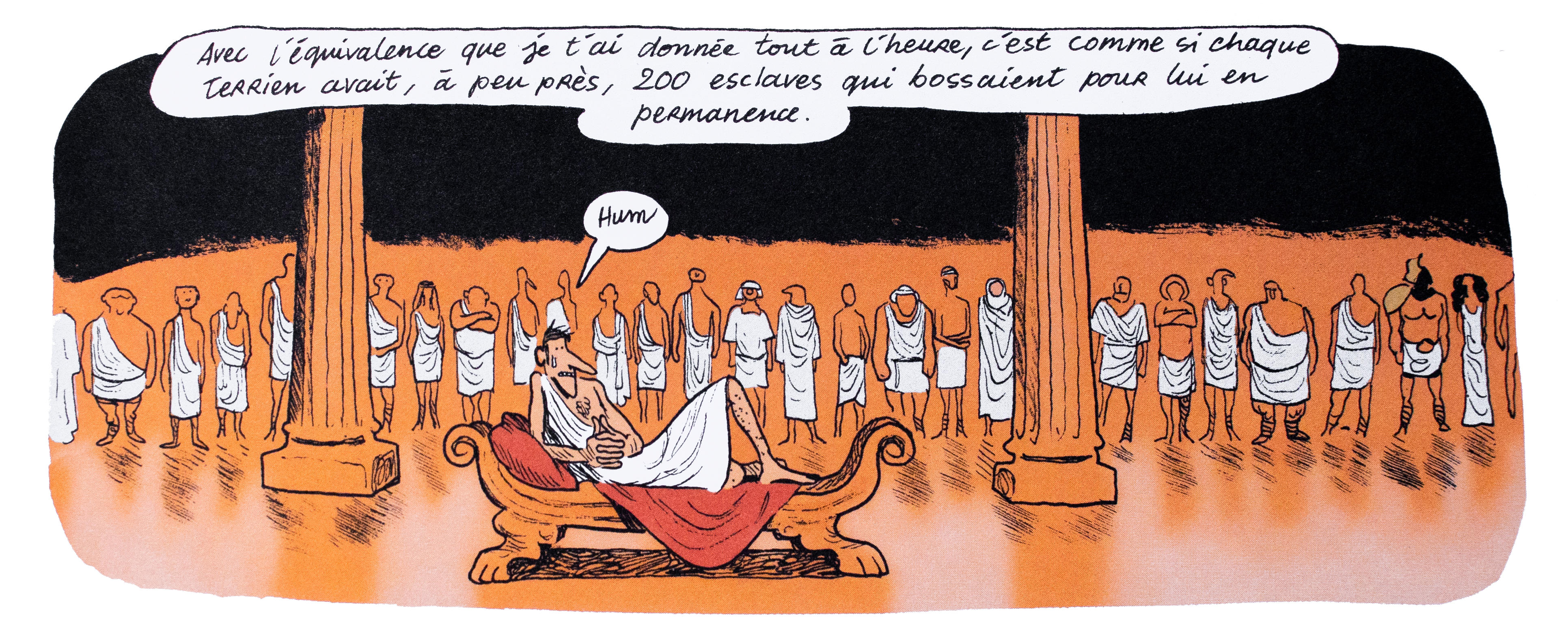
excerpt from the comic book “The World Without End” by Jancovici & Blain, with the concept of energy slavery
- Generative AI is conceptually based on an extractivist model: it harvests all cultural productions, without the authorization or remuneration of the authors/contributors it exploits.
- Generative AI operates in a loop: it generates what is most statistically probable, which means it favors majorities, thus creating standardization effects, in addition to reproducing human discriminatory biases. Some refer to this massive accumulation of AI-generated content, deemed mediocre, as “AI slop“. Furthermore, AI-generated content is so easy to create that it is sometimes more numerous and more visible on the web than other types of content, drowning out or rendering invisible human-generated content.
- AI is being deployed on a massive and rapid scale, while no serious legal framework has been established for it. “ Like most technology policies, both nationally and internationally, the development of AI bypasses any democratic process ,” according to the association “Le Mouton Numérique” (The Digital Sheep). Fun fact: at the end of 2025, Google will give all students (worldwide) free access to its generative AI for one year.
- The ability to generate photorealistic images of all kinds (including deepfake videos) poses a major problem regarding the quality of information. It is now well known that false information is much harder to thoroughly debunk than it is to disseminate to the public, and it circulates much faster than true information. Ensuring the most reliable journalism possible is a constant challenge for democracy in order to establish a foundation of shared reality, which is supposed to enable life in society and informed citizens. Fun fact #2: Meta ended its fact-checking program in April 2025.
So, I come to the cocktail, brimming with curiosity. Now that we know the impacts, what’s next? We need to go further by asking ourselves who generative AI is useful to, and what kind of world we truly want.
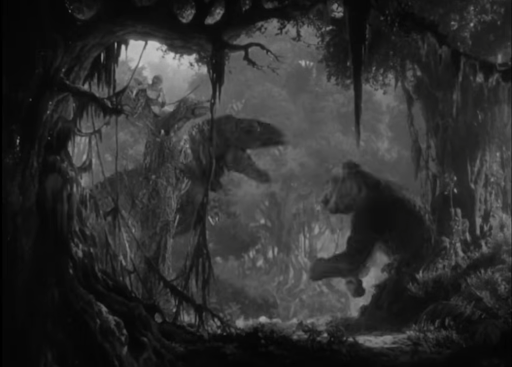
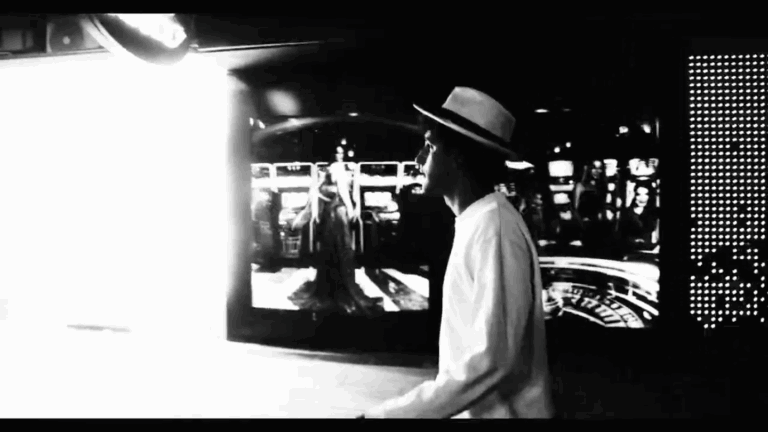
King Kong, Merian C Cooper & Ernest Schoedsack
“Our imagination compensates for our fragility. Without it—without the imagination that gives reality a meaning it doesn’t possess in itself—we would have already disappeared, like the dinosaurs.” The Storytelling Species , Nancy Huston
In our line of work, generative AI seems to be responding to a productivity drive. “It’s convenient,” we often hear. For a lot of repetitive and uninteresting tasks, that’s true. However, our visual arts professions are based on repetition and experience. It’s because we accumulate experiences that our intuition is refined and our skills are built. The process itself is important. The time we take to draw, to conceive an image in our minds, to consider lighting, to develop a composition, to make mistakes, to start again. To talk about our difficulties with a colleague or friend. To get back to work, again. To move forward through trial and error and more or less organized iteration, using our senses, fallible as they may be. All of this isn’t solely about performance or results. This time we take allows us to embody in our bodies a practice, a bodily habit, reflexes of movement and cognition. It generates thoughts within us and forms associations of ideas. The world we want to create is written inside us before it exists outside. The opposite occurs when the shortcut generates “all by itself” (based on the extracted and aggregated work of others) an instantaneous, on-demand result that has not been absorbed into our lived experience.
The meaning of what we do is not simply the production of “content”. The act of creating is also about building oneself as a human being.
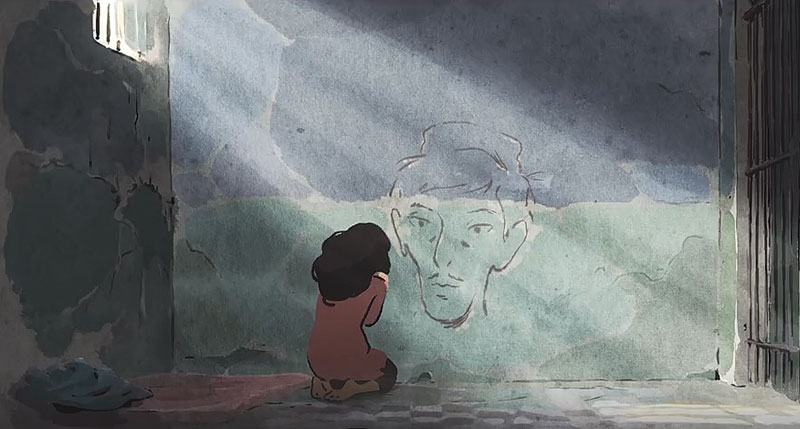
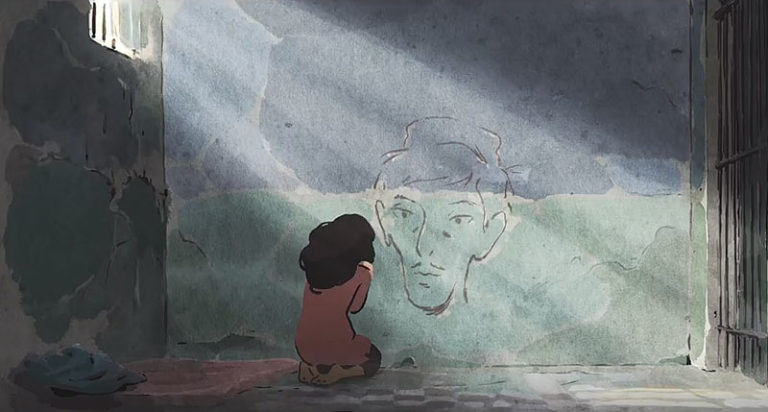
The Swallows of Kabul, Zabou Breitman & Éléa Gobbé-Mévellec
We cannot expect digital industries (or even innovative companies in the audiovisual sector) to defend the common good, creativity, or human cognition. They are safeguarding their private interests, their integration or continued existence within liberal capitalism, and are therefore at odds with our deep artistic or human interests. It is up to us to cultivate these interests and discuss them together, human to human.
Professor Keating, portrayed by Robin Williams in Dead Poets Society , said this: “We do not read or write poetry because it is pretty. We read and write poetry because we are part of humanity, and humanity is made up of passions. Medicine, commerce, law, industry are noble pursuits, and are necessary to sustain life. But poetry, beauty, love, adventure—these are the things we live for.”
This response seems far removed from questions about AI, and yet… The emergence of generative AI should make us question our approach to image creation. Why do we do this work? Fortunately, the answers are endless, and each of us can bring our own variation to the table.
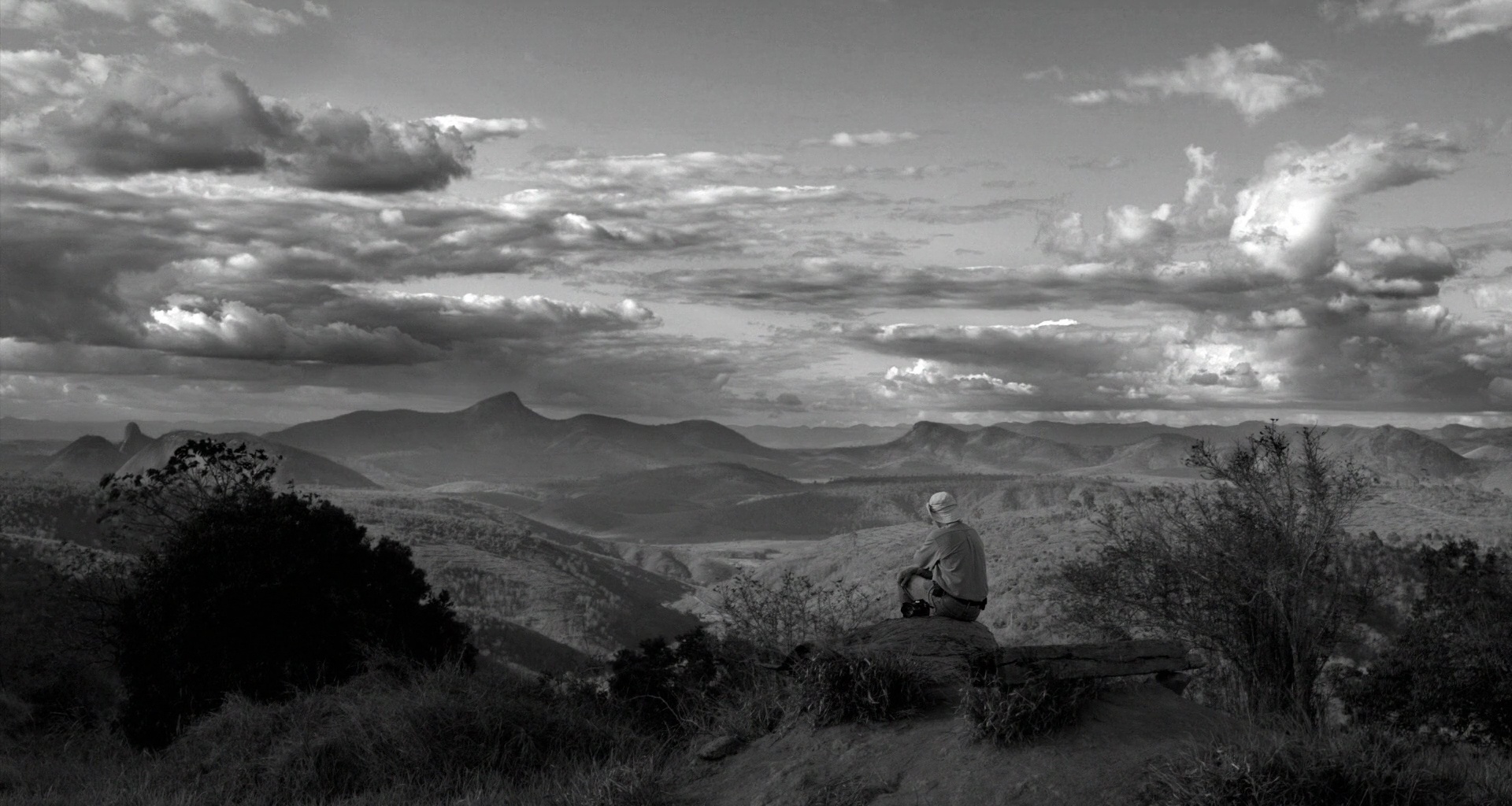
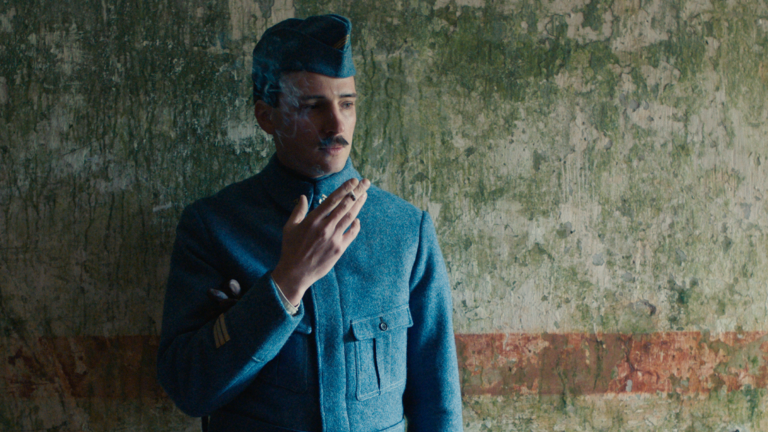
The Salt of the Earth, Wim Wenders
The challenge is not to target isolated individual attitudes but to collectively allow ourselves to keep the door open to this discussion. Technology is always a means, never an end. And even if progress is sometimes presented as an inevitable highway or a train that must not be missed for fear of “getting stuck,” the reality is much more nuanced. We have a vested interest in keeping this door open at all times: the vitality of our professions and our lives depends on it.
Off the highways, what about the trails?
Once we move beyond general-purpose generative AI, we realize that many professions have targeted needs for specific tasks. These are referred to as “AI agents”: their scope of action is narrower because they work with non-public databases, at the level of an individual or a group of people who share information such as their image, sound, and text libraries. There is therefore a vast area of research to explore on this subject. More broadly, and to take a step back, we can commend several robust initiatives that promote the common good: Some workflows allow for the implementation of a watermark in camera metadata, certifying that the pixels come from a real camera ( SATIS conference on this topic ). The ultimate goal of this approach would be to certify valid information and disqualify invalid information, for use on the web and news sites.
• Still focusing on online content, others suggest the utopian idea of developing algorithms that would only recommend verified, real content.
• The Tournesol association, for its part, proposes evaluating content based on its public utility.
• Furthermore, in response to the Generative AI Summit, which brought together tech players and heads of state, a completely different event was held: the “Counter-Summit on AI, for a Humanist Response to Our Time,” in Paris in February 2025.
• On the journalists’ side, media and press unions are beginning to voice specific demands to regulate generative AI , while some 1,300 French scientists are positioning themselves against the deployment of generative AI in their institutions, because it is “incompatible with the values of rationality and humanism that we are supposed to represent and promote.”
There is no shortage of actions, at all levels and in all areas. This allows us to adapt and, above all, to continue seeking paths of humanity.
Useful resources: Chat Gpt, it’s just a tool / Terrestres Review : An overview of generative AI and its political implications / Bon Pote: How tech companies are forcing the use of AI / Digital limits : AI and calibration, SATIS conference / SATIS Conference : CNC Artificial Intelligence Observatory, studies published in December 2025 / CNC