Camerimage is a truly unique and deeply rooted festival, with something quite magical. It’s one of the few festivals where cinematographers are celebrated. Technique and aesthetics are discussed, and you can discuss with people from all over the world, regardless of their career path; everyone is treated equally, and the discussions are incredibly accessible.
This is already my fifth Camerimage, and I see the festival evolve every year.
First visit in 2021: post-Covid, with both an in-person and online edition, so it was a very calm, intimate festival. It was a revelation, and we were wide-eyed with wonder. I remember how surprised and moved we were by the fact that the cinematographers received applause during the credits (which seems perfectly normal to us now!).
Second visit, with the return to full in-person attendance, was incredibly crowded, the festival was packed, and the atmosphere was completely different.
Third visit, we’re starting to get to know the festival well and to find our bearings, seeing the same people every year and deepening our relationships with them.
And then. Fourth visit. 2024: Very few films shot by women were selected, which leads to strongly misogynistic remarks from the festival president, Marek Żydowicz, the withdrawal of the film “The Substance” from the competition, the cancellation of Steve McQueen’s appearance, controversy surrounding the screening of the film that cost Halyna Hutchins her life, a boycott, meetings of associations such as Women In Cinematography during the festival to denounce recent remarks and events…
A strange edition, with a bitter taste. Roundtables are organized, festival-goers try to change things from within, to discuss, to see how to improve the situation, but a great disappointment sets in, trust is betrayed.
Alongside this, a project has been underway for several years: the new European Film Center Camerimage (ECFC). Its construction, however, raised doubts about its ability to be completed on time and within the already substantial initial budget, and part of the project was therefore suspended. Marek Żydowicz continues to sink deeper into his mismanagement of the Center’s construction; contractors are taking the matter to court, and funding is being frozen. The festival president’s lack of transparency and the double standards implemented in the building’s construction are jeopardizing the project’s completion. If the festival doesn’t react quickly, it could very well be its end.

Marek Żydowicz, President of the Camerimage Festival – Photo: Tytus Żmijewski / PAP
After this 2024 edition, I wondered if I would return to Camerimage. We quickly went from a magical festival, where the friendly spirit was at its core, to one filled with disappointment and bitterness. It’s a feeling similar to that of becoming a young adult when reality replaces the utopia of adolescence.
So, what do we do now? Can we (should we) boycott it? What difference will it make?
Personally, I decided to return one last time this year to gauge the situation, see how things had evolved, and decide what to do next.
And this year, it was a real blow. Most of the usual partners and sponsors were absent, the market was practically empty, there were few conferences, few exchanges, and few festival-goers. The film industry is struggling, and manufacturers are finding it difficult to stay afloat. Camerimage isn’t doing anything to help them, partly due to the funding needs of building the European Film Center Camerimage. Prices are skyrocketing, the bill is exorbitant, and most exhibitors can no longer hope to hold a conference or have a booth at the market. The investment isn’t worthwhile for exhibitors and festival sponsors, many of whom have cancelled their attendance. Despite the 2024 scandal, this year continues down the wrong path, and Camerimage is paying a heavy price.
A glimmer of hope lies with the organization “Women With a Movie Camera,” which is organizing a photo exhibition based on their podcast, “You’ve Got Lovely Eyes, You Know!”, regarding the female gaze on our professions, with the support of the United Cinematographers Organization (UCO). At the opening, on Tuesday, November 18th at CSW, we had the pleasure of welcoming Nancy Schreiber, ASC, who gave a beautiful speech about her career, during which she had to fight to make her mark.
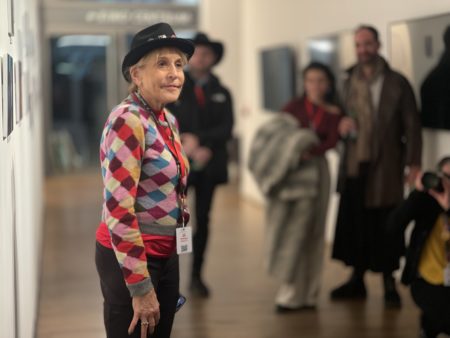
Nancy Schreiber, ASC at the opening of the photo exhibition “You’ve got lovely eyes, you know!”
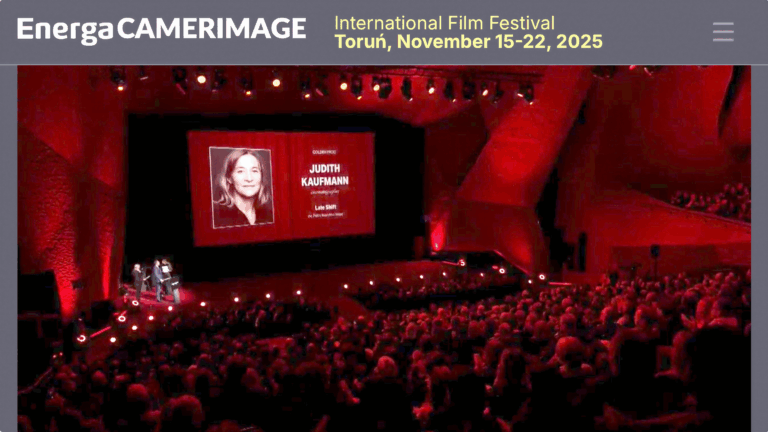
Women With a Movie Camera is holding strong, and now more than ever is the time to support women at Camerimage. This year, only 8 out of the 42 films screened are shot by female cinematographers, which is far too few. In 2024, Women in Cinematography pointed out that internationally acclaimed films shot by women have been out of competition in recent years ( Mudbound , Power of the Dog …) and that Portrait of a Lady on Fire was completely omitted from the festival. Over the festival’s 30-year history, only 3.1% of the films selected for the main competition were shot by women. This year, Judith Kaufmann, BVK, won the Golden Frog for Late Shift . She is only the second woman to receive this award, the festival’s most prestigious. Her speech on the film selection process at Camerimage are all the more relevant and accurate in light of recent events.
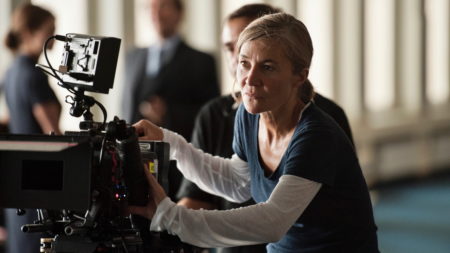
Judith Kaufmann, BVK
At the UCO, we’re trying to combat the feeling of powerlessness and do what we can by supporting the FALC exhibition and speaking out about the festival’s issues, hoping to encourage festival-goers to become aware of and reflect on the matter, and perhaps change things a little from within. Boycotting is another option, but do we have enough clout for our boycott to have any impact? How can we convince others to join a boycott? If we manage to be large enough to boycott, wouldn’t that jeopardize the festival’s future instead of improving things? I don’t have answers to all these questions.
The festival has lost its soul. If we only wanted to see films, we wouldn’t travel all the way to Poland. Arriving this year, I remembered why I’ve been coming every year for the past five years. We have exceptional encounters there, with people from all over the world and from all walks of life, whom we would probably never have met otherwise. It’s an environment that helps us grow and broadens our vision of the profession globally. Cinematography isn’t just about beautiful images, but also about images that have meaning, serving stories in the broadest sense. Our professions are an integral part of a fragile and complex industry, and we have a duty to stay informed about the issues impacting our work environment.
I hope that this 33rd edition of Camerimage will serve as a catalyst and that measures will be taken to ensure the continued participation of exhibitors, to nominate more films shot by women, and that the next edition can take place without conflict.
Cover image credit: Witek Szydłowski