At Camerimage, you’ll find all sorts of films, from the most popular to the most inconspicuous. The main competition often showcases big-budget titles already released in theaters or available on various streaming platforms. Yet, sometimes a discreet, little-known gem manages to find its place among these blockbusters. This is the case with Late Shift (Heldin), directed by Petra Volpe and photographed by Judith Kaufmann, BVK, which tells the story, with exquisite restraint, of a nurse’s daily life in a Swiss hospital, and which has just won the Golden Frog, Camerimage’s highest award.
Cast a gaze
As I experienced this film in the Camerimage’s main screening room, the words of Céline Scemama, professor of film history at Paris 1 University, resonated with me as an undeniable proof: to set up a camera is to take a stand .
Petra Volpe recounts that this story came to her while she was living with a nurse who experienced daily life with illness, fear, death, and the constant interaction with patients and their families. Her aim, through Judith Kaufmann’s camera, was to convey solely the perspective and gaze of these frontline healthcare workers who most often find themselves alone in the face of these situations.
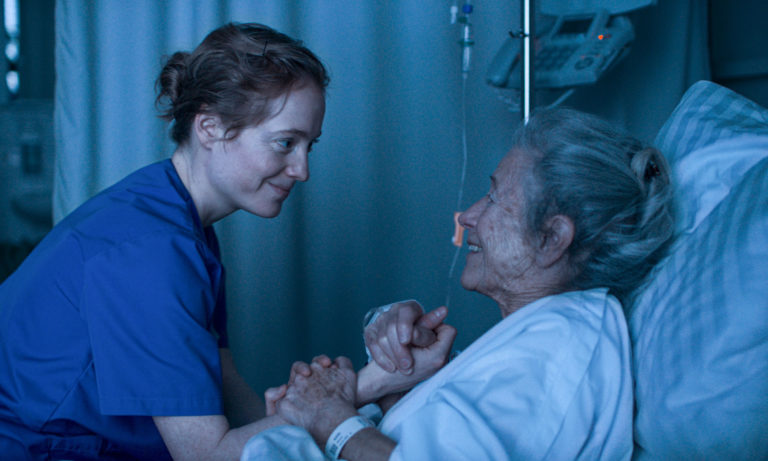
For 90 minutes, we follow Floria, a nurse who must manage both pain and anxieties, the urgent and the trivial, clinging to a patient list that guides her like a compass through the storm of an understaffed hospital, a pace that steadily accelerates until the very end. The director had, in fact, expressed this wish to her team: to make a film that would be a physical experience, leaving viewers truly exhausted afterward, as if they themselves had been on duty in that hospital.
The narrative unfolds as a clear tribute to healthcare workers who are pillars of our communities every day, wherever we are on the planet. But a question, a recurring theme that stays with us long after the lights have come back on, revolves around this film: how can we ensure that dignity remains the only beacon in the storm? 
Dignity at all costs
Perhaps this is the film’s greatest achievement: showing things without embellishing or uglifying them, but simply as they are: a succession of fragile and dignified moments in an environment that would otherwise try to reduce everyone to a function, a diagnosis, or a room number.
Judith Kaufmann’s subtle lighting contributes masterfully to this narrative. Never resorting to superfluous effects, the cinematographer employs sometimes very delicate techniques to follow Floria through the maze of hospital corridors and floors, sometimes choosing long, uninterrupted shots where we follow the nurse, like Sisyphus, tirelessly pushing her medical cart; and sometimes slower shots that focus on a precise medical procedure: the preparation of a medication, the measurement of a vital sign, or a lullaby sung as a final remedy.
One scene, brilliantly filmed, particularly stands out: a patient whose heart has stopped is taken in charge by Floria, alerted by the patient’s children. The scene is as harsh as it is poignant; the violence of the resuscitation procedure is balanced by the unwavering respect shown by the caregivers who take her in, even after all hope is lost. 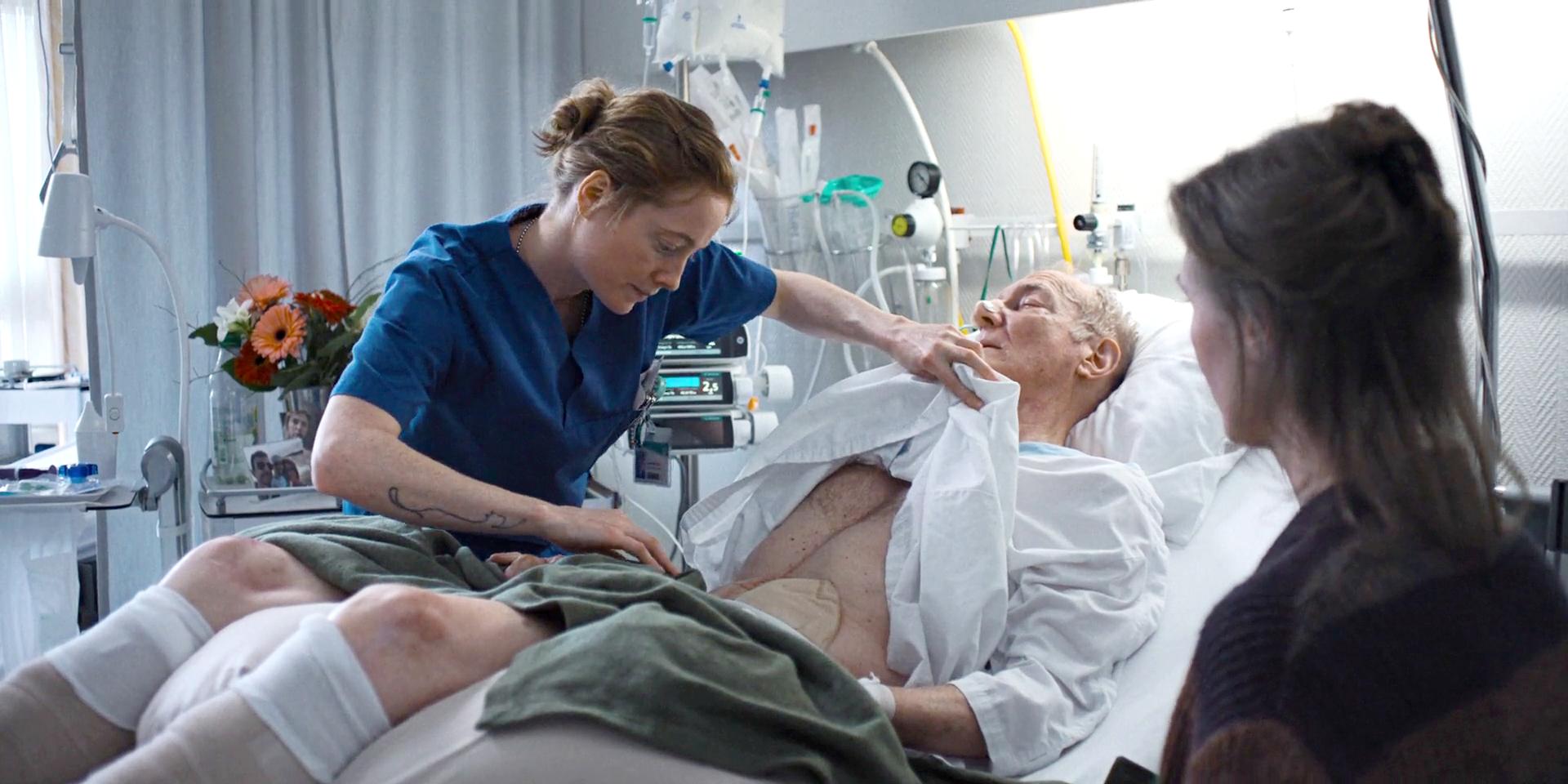 Late Shift is a political act; beyond its technical and artistic mastery, it questions our society and the choices we make collectively. What part of our humanity are we willing to relinquish? Do we accept living in a world where nurses, firefighters, paramedics, and other caregivers can be reduced to such an extent that their dignity is erased? How can we expect a society to function when it no longer cares for those who care for us?
Cinema is perhaps at its most beautiful when it awakens in us an emotion that cannot be extinguished, that must never be extinguished. I sometimes forget that a film is political, that putting up the camera is taking sides, but today, through this representation of those who, without hope, without witnesses and without reward, maintain the course of human dignity, I am reminded once again of the responsibility we have when we tell our stories, and I can only marvel that the Golden Frog has tonight rewarded those who tell, and those who are told.