After the screening of Hamnet, Łukasz Żal unravelled a method that, beneath its surface simplicity, reveals a kind of sophistication grounded in listening. Adapting Maggie O’Farrell and working with Chloé Zhao pushed him toward something other than period aesthetics: a way of letting bodies exist, letting silence breathe, letting the fragility of the world remain visible.
Creating a space where something can happen
Żal explains that everything began with a simple idea he discussed at length with Chloé Zhao: prepare a space where emotions could genuinely arise, instead of reconstructing them through technique.
“The most important thing was to create an atmosphere where presence could emerge, where we could witness what was happening between the characters. Everything had to be simple, honest, almost ordinary.”
This “ordinary” has nothing to do with plainness. For him, it’s a condition of truth — a refusal of spectacle.
The forest: immersion, not documentation
Long before camera tests, he shuttled between Poland and England. Then one evening Zhao called: “Come tomorrow, we’re going into the forest.”
They spent four days there with a tiny team. No shot lists. No diagrams. Just observation.
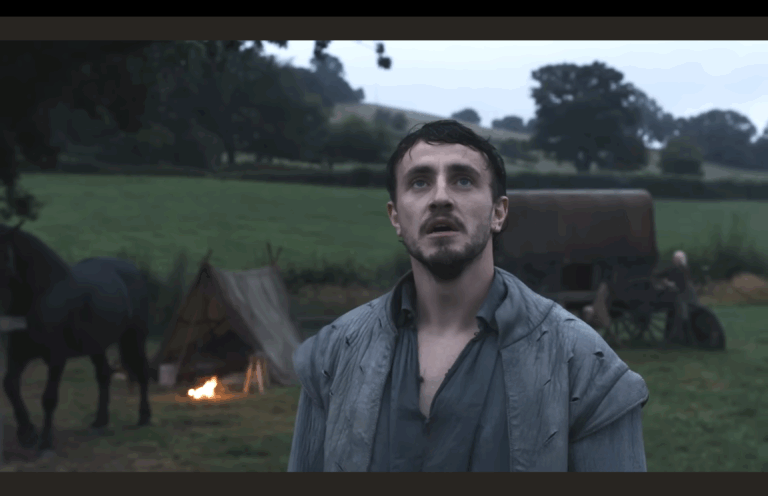
“We wanted to feel what it is to be in that forest. To learn the place, to let it enter our bodies. The energy of the film was born there, in something close to documentary.”
Over time, the forest stopped being a backdrop and became a partner.
A small camera, no intermediaries
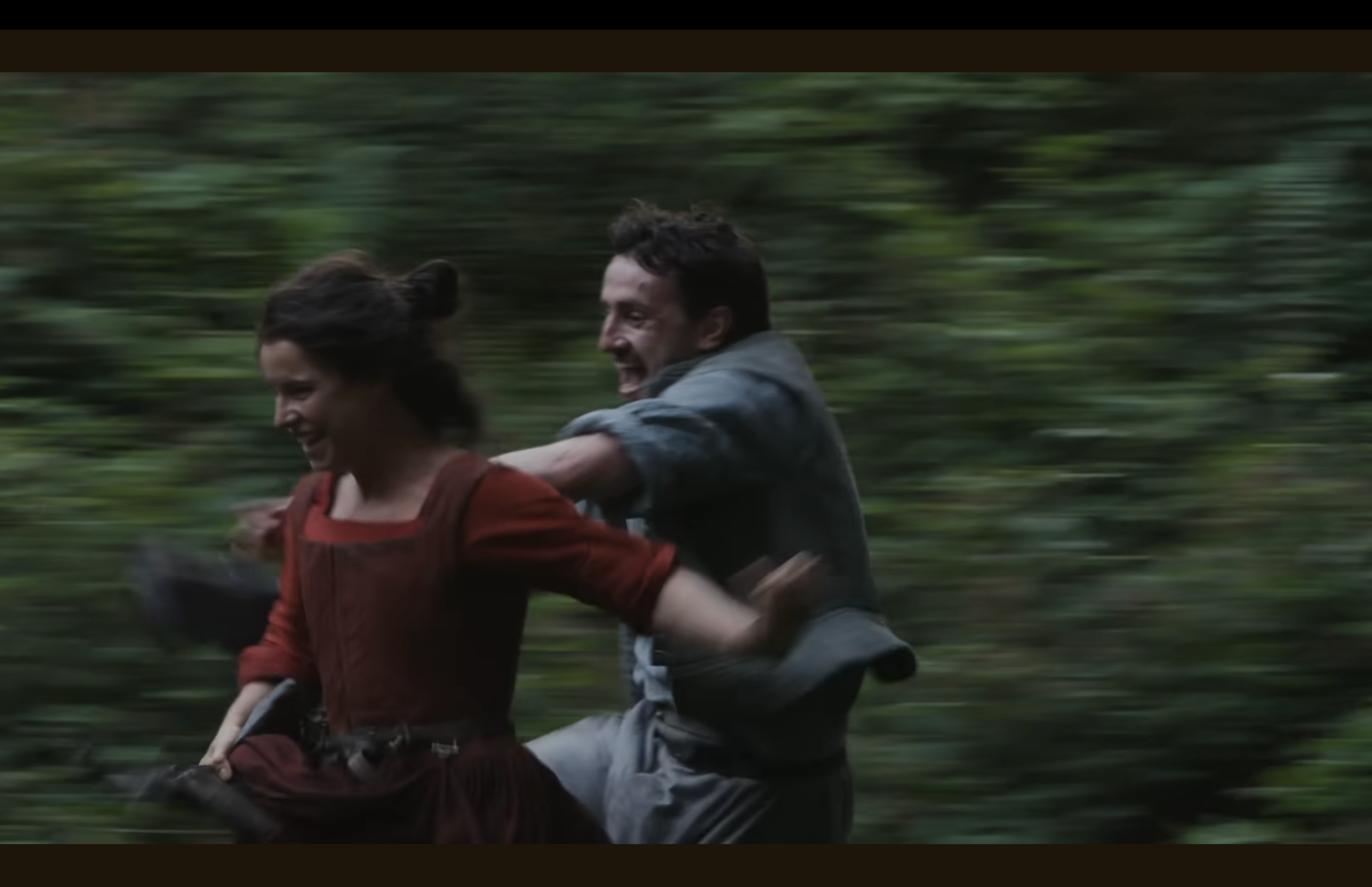
Żal briefly considered gimbals and cranes — a logical reflex for exterior work. Then he spoke with Paul Mescal.
“He needed total freedom. The moment anything stands between the operator’s body and the camera, you lose the ability to react. And here, reacting was essential.”
They chose a stripped-down, ultra-light Alexa. The cranes were abandoned.
“A simple camera, held directly against the body. Nothing else.”
That technical modesty became a tool of precision: the ability to follow the tiniest shift, the unexpected gesture.
The frame as a tableau, and the off-screen space as a world
Asked about his abundance of static shots, he doesn’t hesitate:
“I only move the camera if there’s an inner need to move it. The frame is the most important thing. A strong composition can hold a fragment of reality and let you sense everything continuing outside the frame.”
For him, that off-screen space is as moral as it is narrative — something that breathes, a world that cannot be reduced to découpage.
Four ways of looking at the same story
Simplicity didn’t prevent a complex grammar of viewpoints. Żal identifies four “attitudes” of camera:
– solid, static tableaux;
– a “human” camera, very close to bodies;
– a corner camera, “like the eye of death watching”;
– and a drifting “ghost camera”.
“Sometimes you’re right in the heart of emotion; sometimes you’re suddenly outside, watching yourself as if observing the small, ridiculous battles human beings fight.”
These shifts give the film its rhythm, allowing it to move from the intimate to the mythic.
Night, candles, and the one percent
The night scenes drew a lot of attention: their darkness is unflinching. Żal smiles when people ask how much of them we were “meant” to see.
“We used real candles. And just a veil of LED light, heavily diffused. My gaffer kept asking to raise the level a bit. I kept refusing. In the end, I agreed… to one percent. No more.”
He stands by that choice:
“I’d rather have something less pretty but more truthful than a commercial, polished image where actors are lit with special treatment. Life isn’t lit like that.”
His way of filming darkness becomes almost an ethical stance.
The theatre crowd: dissolving in order to exist
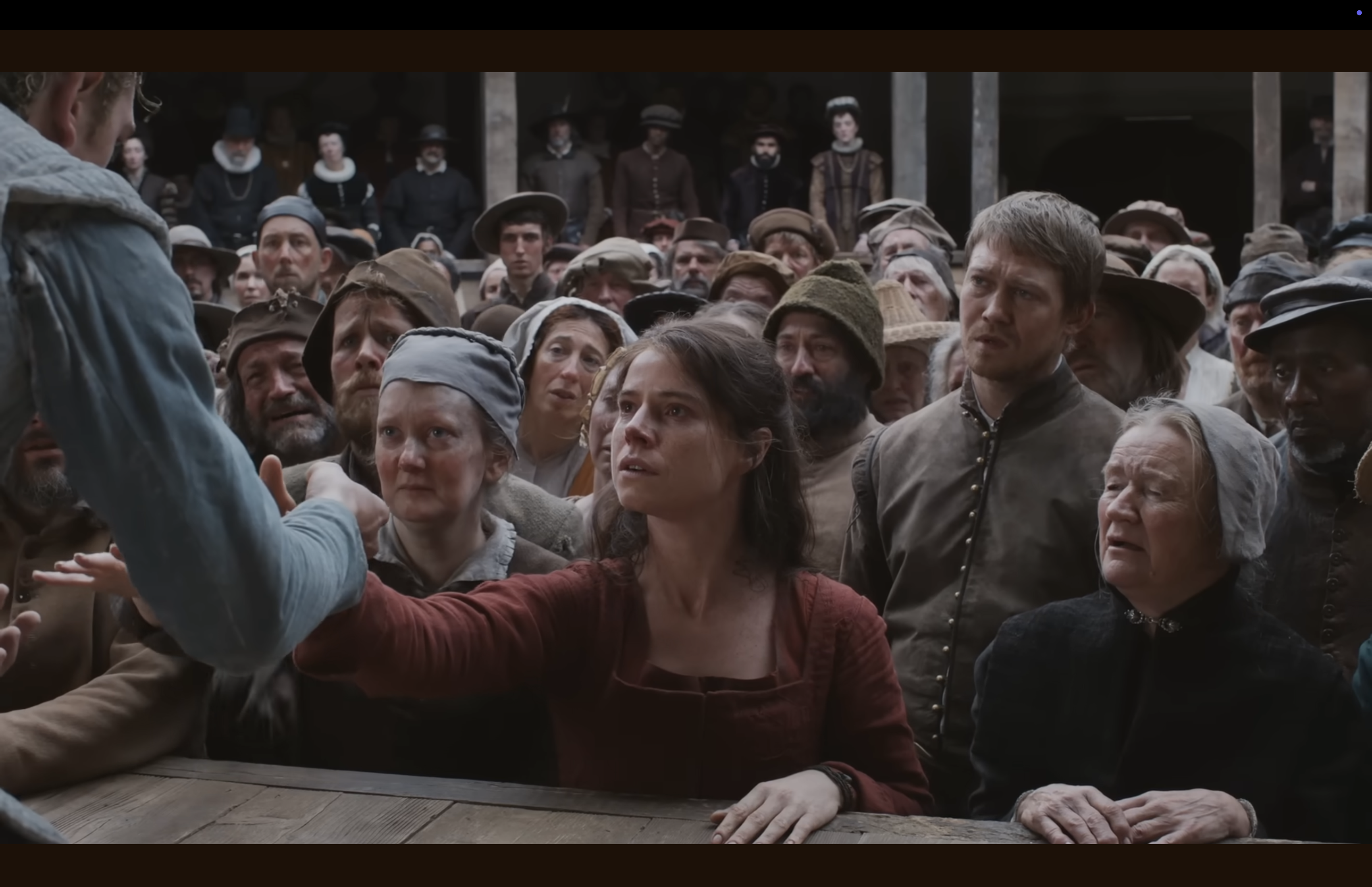
A viewer asks about the final sequence in the theatre: Agnes and Bartholomew stand at the centre of the frame yet are indistinguishable from the crowd. Żal nods.
“From the very beginning, we didn’t want them to stand out. Agnes enters feeling she doesn’t belong in that crowd, and little by little she realises she’s part of it. We all feel the same things. We’re born, we die. We share something.”
It’s a scene where the directing denies the usual privilege of main characters.
The community becomes the narrative unit.
Saying “yes” to the film on an airplane
Żal recounts the film’s origins like a small, quiet story. Zhao asked to meet him. He stopped in London with his son, just long enough for dinner. She spoke about the novel, and told him she wanted to make the film with him.
“From the restaurant door to the airport, I bought the book on my phone. I read it on the plane. It was a story about life, death, humanity. About questions I’ve been asking myself since childhood — to be or not to be. I knew I had to do it.”
Someone asks whether he ever asked Zhao why she chose him. He laughs.
“No. I never asked. We realised we’re a bit alike — a bit chaotic, a bit wild. And very together in the work.”
Preparing through doubt, creating through tension
He describes his working method: long stretches alone, watching films, making PDF notebooks from scouting stills, accumulating light tests.
“I always go through a phase where I tell myself: I have no idea how to shoot this film. I get angry at myself. Then, by watching, thinking, trying, something appears.”
With his colorist, he built a LUT that was very contrasty, almost aggressive. They shot with it. But when they reached the final grade, Zhao pushed back.
“She has incredible intuition. We’d gone too far. We wrestled a bit, then returned to something simpler. She was right.”
He closes with a line that sums up his working philosophy:
“It’s good when someone stops you from going too far.”