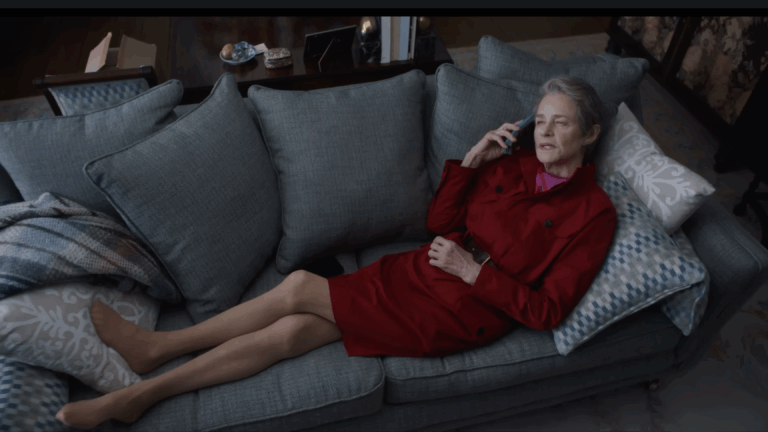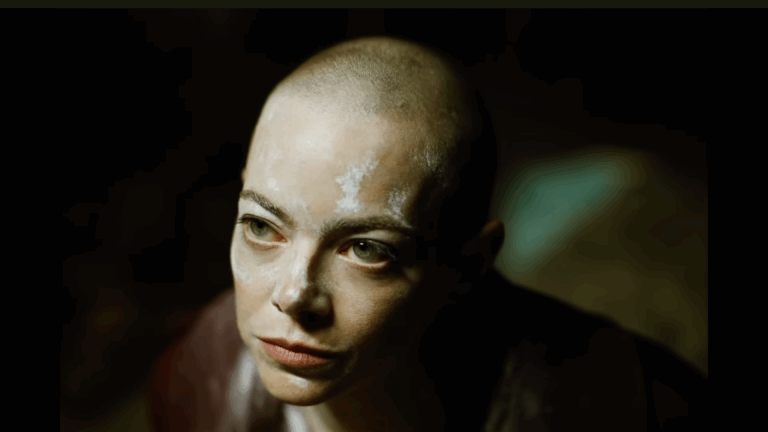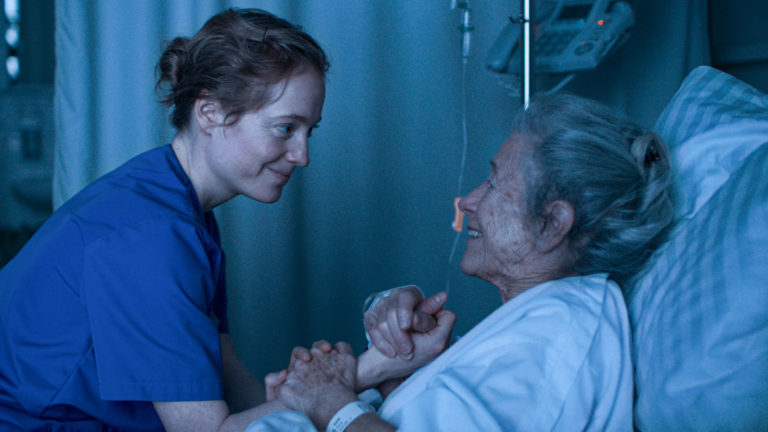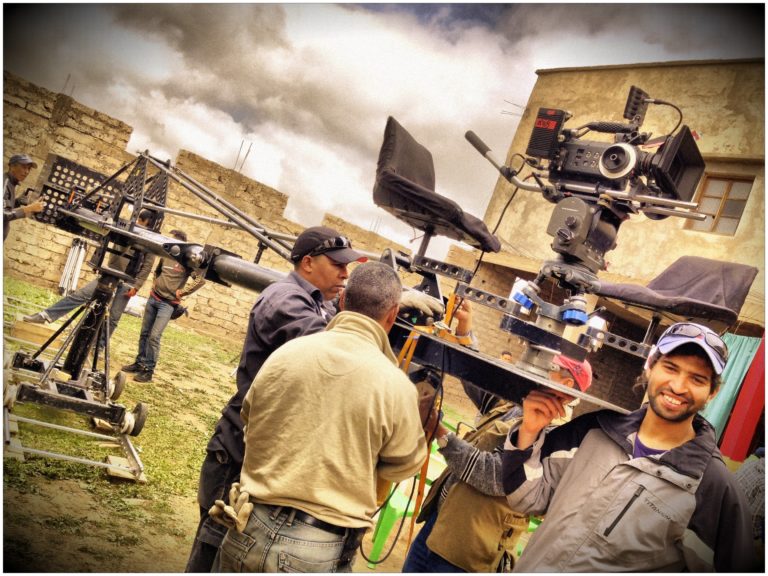
At Camerimage, ARRI brought together Ellen Kuras ASC, Maria S. Herrera AMC, and Barry Ackroyd BSC to talk about a subject that sounds technical on paper: camera movement.
Behind the dollies, steadicams, and zooms, one idea kept resurfacing: a shot isn’t placed — it’s lived.
Here are some highlights.
I. Ellen Kuras – The Constructive Chaos of Eternal Sunshine
Working with Michel Gondry, Ellen Kuras quickly realized she had to throw out the traditional playbook.
“When I first read the script, I thought maybe I needed to read it upside down.”
“If I had shown up with my little DP toolbox : ‘this is how you make a movie’ I never would’ve made this film. I had to follow his brain as it zigzagged everywhere.”
Gondry rejected dollies, track, and heavy lighting. The result: a handmade workflow built entirely around handheld.
“He didn’t even want a basic tracking shot. So we improvised: hand carts, utility carts, wheelchairs. The operator riding, the grip pushing.”
The famous hallway one-er sums it up.
“Chris was backing up, climbing steps, entering the clinic… every take he’d slam into the doorframe. I was behind the door, grabbing the mag to soften the hit. We got the right take on number twelve.”
Underneath the apparent chaos, a simple rule:
“We choreographed actors and cameras together. Nothing was random.”
II. Maria S. Herrera – The Ghost-Camera of Macondo
For 100 Years of Solitude, Herrera shot inside a fully built Macondo — a set, but also a deeply personal memory.
“I read the book in high school. Walking into the rebuilt Macondo felt like stepping inside an old memory.”
The show’s signature sequence (a four-minute continuous shot) depended on precise orchestration.
“Everything was crafted live, in front of the camera. A ton of logistics — people running behind the walls, changing filters, swapping costumes.”
The light, intentionally “too perfect,” is part of the design.
“I don’t think it’s realistic. But that slight artificiality creates a kind of magic. It matched the book.”
Her rule is straightforward:
“Every camera movement needs a reason to exist.”
And sometimes, the camera becomes a ghost:
“At times the camera floats like a spirit — it follows a character, leaves her, finds her again. It has its own life.”
Her directions to operators fit in one line:
“I don’t talk on the headset. I just tell them: connect to the character. Let your body react.”
III. Barry Ackroyd – Documentary Instinct, Controlled Chaos
With Kathryn Bigelow, Ackroyd embraces an instinct-driven approach shaped by his documentary background.
“I’m not great at prep. I interpret the film while shooting it.”
In the scene shown at the talk, the camera searches for information along with the viewer.
“The camera doesn’t know exactly what’s coming — and that’s intentional. We’re searching at the same time as the audience.”
His setup relies on three cameras — all treated as priorities.
“There’s no B-camera. All three are A-cameras. Every take, we move them.”
The zoom becomes a storytelling tool.
“The zoom lets us re-frame without cutting. If I push toward a character, the focus puller knows where we’re going.”
Actors move without marks.
“No marks. No formal rehearsals. The actors arrange the space the way their characters would. We roll until we find the rhythm.”
The documentary DNA is still present.
“In docs, we observed without interfering. A 16mm camera, one zoom, a sound recordist listening to the world. That shaped me. I still keep my head clear. My motto: let’s try to do it better on the next take.”
IV. Ellen Kuras as Director – Lee and Memory at Human Scale
With Lee, Ellen Kuras steps into feature directing while keeping a DP’s sensitivity to light and point of view. She chose Paweł Edelman as cinematographer.
“I knew he’d be perfect. He shoots with his heart. For Lee, that mattered.”
They switched to the then-brand-new ARRI 35.
“Paweł had done almost all the tests on the 35, a few on the LF. I laughed — ‘I see what you’re doing.’ I told him: fine, we’ll get a filmic texture with this camera and these Leicas. Let’s do it.”
The Dachau sequence demanded accuracy, respect, and clarity.
“I didn’t want to ‘present’ the camp. I wanted to experience it through them. See the camp on their faces before revealing what they were seeing.”
“I wanted that walk to feel almost endless — an eternity of witnessing.”
Budget limits became staging problems.
“We had to build the gate. If necessary, I would’ve paid for it. They couldn’t finish the other side, so we redesigned the choreography to hide what was missing.”
She talks like a DP who still thinks through images, not abstractions.
“Every shot needs intention. A visual metaphor. Nothing is arbitrary.”
And the relationship to the camera remains intimate.
“Being a DP means living inside a family. As a director, you’re more alone. Sometimes I go up to the camera and say: ‘Hi — remember me?’”
_______
Three cinematographers, one director, four ways of embracing a camera that doesn’t “know” where it’s going right away.
- For Kuras, it’s improvised organic movement and the weight of memory.
- For Herrera, a narrator-ghost that glides through Macondo.
- For Ackroyd, documentary instinct and the zoom as compass.
All share a simple idea:
Movement isn’t an effect — it’s a form of openness.