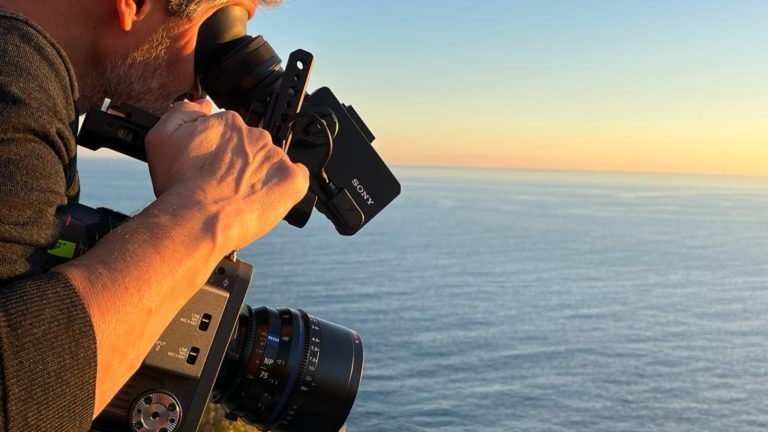
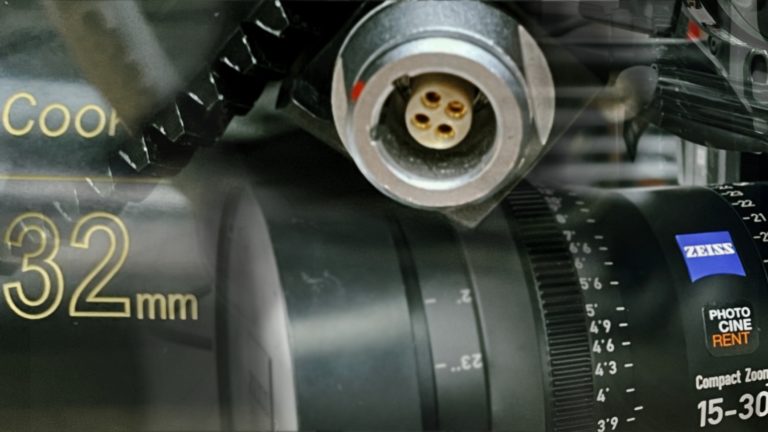
On April 14, 2026, a joint announcement from Wuppertal and Munich put an end to uncertainty that had been brewing since the previous summer. Thomas Riedel, founder and owner of Riedel Communications and the Riedel Group, has acquired ARRI at the conclusion of a competitive international process, in what amounts to the largest acquisition of his career. One hundred nine years after it was founded by August Arnold and Robert Richter, the Munich house is leaving family hands to join those of a Wuppertal entrepreneur, a pioneer in live audio and video infrastructure.
The word “acquisition” can make people nervous. In an industry where the smallest buyout too often ends in a wave of layoffs, the dismantling of historic teams and a dilution of the brand’s DNA, cinematographers have learned to be wary of grand, enthusiastic announcements. The contrast with the dreaded scenario is worth underlining. ARRI retains its operational independence, remains headquartered in Munich, and keeps its current leadership team: Chris Richter and David Bermbach stay on as Managing Directors. Dr. Walter Stahl, representing the founding family, emphasizes that the company, carried since 1917 by an unbroken line of family ownership and recognized with twenty Scientific and Technical Awards from the Academy of Motion Picture Arts and Sciences, remains under German ownership. Thomas Riedel is neither a private-equity fund chasing yield nor an Asian conglomerate absorbing a troublesome competitor. He runs a first-generation family business and lays claim to the logic of a long-term industrial entrepreneur.
A turbulent year behind the official smile
The press release is measured, almost smooth. But to read the map properly, you have to fold it back over the past year. Rumors had been circulating since August 2025, when Bloomberg revealed that the Stahl family, heirs to co-founder Robert Richter, were exploring strategic options, up to and including a possible sale. What followed was a rough year: the sale of the lighting subsidiary Claypaky to EK Inc., the closure of two German sites, 150 job cuts, and a carefully worded December statement that reaffirmed the commitment to camera and lighting while remaining notably silent on the question of ownership.
The high-end cinema market is going through a structural turbulence of its own. Traditional fiction is receding, the pipeline of linear productions is tightening, and the pressure from the privately owned camera market (RED, Blackmagic Design and others) is rapidly closing the technological gap that once protected the premium segment. In that context, ARRI’s R&D — expensive by nature — called for either a productivity shock or a broadening of the addressable market. The Riedel deal offers the second path.
From glass to signal: an unprecedented vertical integration
The first visible milestone of the alliance will arrive sooner than one might expect: ARRI will debut its camera technology at the Eurovision Song Contest 2026 in Vienna, an event for which Riedel already provides the technical infrastructure and NEP handles production. The symbolism matches the ambition: filming one of the largest televised spectacles in the world with cinema gear, on live infrastructure, end to end.
Until now, the two companies operated at opposite ends of the production chain. On one side, ARRI and capture: camera bodies, lenses, lighting, color science, image fidelity, Super 35 and large-format sensors. On the other, Riedel and transport: high-bandwidth audio, video and data networks, real-time communications, video over IP, intercoms, infrastructure for stadiums and major events. Riedel’s strengths in live production infrastructure, from intercoms through signal distribution to private 5G networks, fill gaps that ARRI had never addressed; conversely, ARRI’s camera and lighting ecosystem gives the Riedel Group a foothold on the content-creation side of the chain it previously lacked.
The phrase from glass to broadcast is already circulating in the trade press. It describes an industry where the camera is no longer an island but a connected node in a cloud-based pipeline, part of an ecosystem rather than a standalone tool. The ALEXA 35 Live, with its fiber back and studio interfacing, already pointed in that direction. The next generations may well go much further: native high-bandwidth IP transport, refined metadata handling, sophisticated remote control, real-time color grading in direct dialogue with the control room.
Relief, and a few open questions
On professional forums, relief is the dominant note: not a private-equity fund chasing yield, not an Asian conglomerate absorbing a troublesome competitor… But a privately held German industrialist, operational continuity, headquarters preserved. The community knows how to recognize good news when it sees it, even tempered news.
But the move sits within a wider landscape that has to be looked at squarely. Nikon’s acquisition of RED in 2024 brought one of cinema’s most inventive camera builders under the umbrella of a Japanese photography giant, and Leica Camera AG’s owners are reportedly considering the sale of their controlling stake, valued at around one billion euros. The era of independent, family-run camera manufacturers seems to be drawing to a close.
The official narrative speaks of continuity and strategic reinforcement. It is likely sincere. What remains to be seen, in the coming quarters, is how Riedel’s broadcast culture will meet the cinematic watchmaking of Munich. Two trades that are close in their technical exigency, but that decades have shaped to very different tempos: one lives in the carefully prepared long shot, the other in the signal that has to arrive, without fail, in real time.
Whether tomorrow’s ARRI camera will look like today’s is not really the question. It won’t. Whether it will still look like an ARRI camera is another matter. The look that has built the brand’s reputation — that recognizable softness of color, that texture which holds together on the big screen and on a streaming platform alike — will it hold in an environment designed first and foremost for transmission? The ARRI Image Science license granted to HONOR for a smartphone, announced at MWC 2026, already suggests that Munich is willing to let its craft travel beyond its own bodies. The direction is coherent; the results remain to be filmed.
What is a cinema image, after all, when it is broadcast live to a hundred million homes? Who, tomorrow, will carry the memory of the gestures and choices that made ARRI — a family stepped back, a management team kept in place, a new shareholder in charge? And if large-format sensors become the norm of the live world, what becomes of the line between cinema and television — a disciplinary ridge, or merely a difference of workflow?
From Set to Stadium: A New Dual Technical Culture
The acquisition of ARRI by Riedel acts as a revealer. It throws light on a shift already under way on live sets, one that is quietly redrawing the job descriptions of an entire profession.
For a long time, sports and event broadcasts relied on 2/3-inch studio cameras, prized for their sharpness and considerable depth of field. The logic was clear: keep the action in focus from start to finish, even at the cost of any separation between planes. Audiences wanted legibility, not atmosphere. That expectation has shifted. Viewers raised on high-end streaming productions, polished music videos and cinematic documentaries now want to find, in live coverage, the visual texture they associate with cinema: shallow depth of field, large-format sensors, nuanced skin tones, a clean separation between subject and background.
Filming a concert or a match with a Super 35 or large-format sensor is not the same as filming with a 2/3-inch. The depth of field shrinks, the zone of sharpness becomes critical, and focus pulling moves into a different regime of demand. A singer drifting three meters across the stage during a chorus, a sprinter emerging on the backstretch, a millimeter-perfect choreography on set: on a large sensor, the smallest focus slip is instantly visible, live, in front of millions of viewers. Focus pullers and operators able to hold that sharpness through the unpredictability of live are becoming rare, and highly prized.
A migration already under way
On professional forums, operators — Steadicam operators in particular, coming from fiction — describe a pivot toward broadcast and live entertainment. The phrasing keeps coming back: that’s where the work is right now. Some add that, faced with the pressure of artificial intelligence on narrative production, live appears as a shelter that is difficult to automate. A match is played once; a concert unfolds; the capture cannot be redone. The trained eye, the practiced hand, and the instinct for the field still hold a value that generative models have so far struggled to match.
This migration opens new professional territories. The live DP, a hybrid between cinematographer and broadcast technical director, does not yet have a stable title in collective agreements. And yet the profile is taking shape: someone who can think lighting for a large sensor, negotiate an aesthetic with the control room, talk to vision engineers, and understand the latency and bandwidth constraints of a video-over-IP network. It is a job that requires two technical cultures at once, and one that few schools explicitly train for today.
What changes for rental houses and for sets
Rental houses will see their inventories reshuffle. An ALEXA 35 Live fitted with a fiber back and destined for a stadium is not rented like a standard ALEXA 35 on a fiction set. The accessories change, so do the lenses: the range of cinema optics adapted to live remains relatively thin, and rental companies will need to invest in coherent packages, sometimes robotized, sometimes paired with stabilization systems specific to live work. On-site technical teams, long compartmentalized between cinema cameras and broadcast cameras, are starting to mix.
For cinematographers wondering about the next chapter of their career, the period deserves attention. The depth of the craft does not disappear with the rise of live; it shifts. Accumulated knowledge about light, framing, movement and focus finds, on these hybrid stages, a new ground for expression, with its own constraints and its own rewards. The signal leaving the camera no longer stops inside a memory card: it travels in real time to millions of people. That kind of responsibility, new to many, has something exhilarating about it. It also has something vertiginous.
The remaining question is where, tomorrow, the line between cinema and live will run — if a line still runs at all.
At what moment will the grammar of live begin to feed back into that of fiction?
And which schools, which associations, which unions will carry the training and the recognition of these hybrid profiles that the market is already asking for?